

DOMIQ x KNX
New possibilities.
The same installation.

Combine the reliability of KNX with the capabilities of DOMIQ. Integrate devices from different manufacturers, create advanced automation, visualizations, and operating scenarios, and manage the entire installation from a single system.

Flexible expansion
Wired Communication
Complete System

What is KNX?

KNX (formerly known as konnex) is one of the world’s most popular building automation standards. It is used to control lighting, heating, air conditioning, window shades, ventilation, security systems, and many other systems in residential and commercial buildings.

Unlike many solutions based solely on wireless communication, KNX typically uses a dedicated wired bus, which ensures high reliability, stable operation, and the ability to implement advanced automation functions.

The KNX standard has been in development for over 30 years and is supported by hundreds of manufacturers worldwide. As a result, the investor is not tied to a single equipment supplier and can freely expand the system in the future.

KNX is just the beginning...

Who is KNX for?

KNX is often chosen by people building new homes, developers working on more advanced automation projects, and owners of commercial buildings who expect reliability and the ability to expand the system over the long term.

Due to its wired architecture, it works best in new construction projects or during major renovations, when it is possible to install the necessary cabling.

DOMIQ x KNX – combining reliable automation with open integration

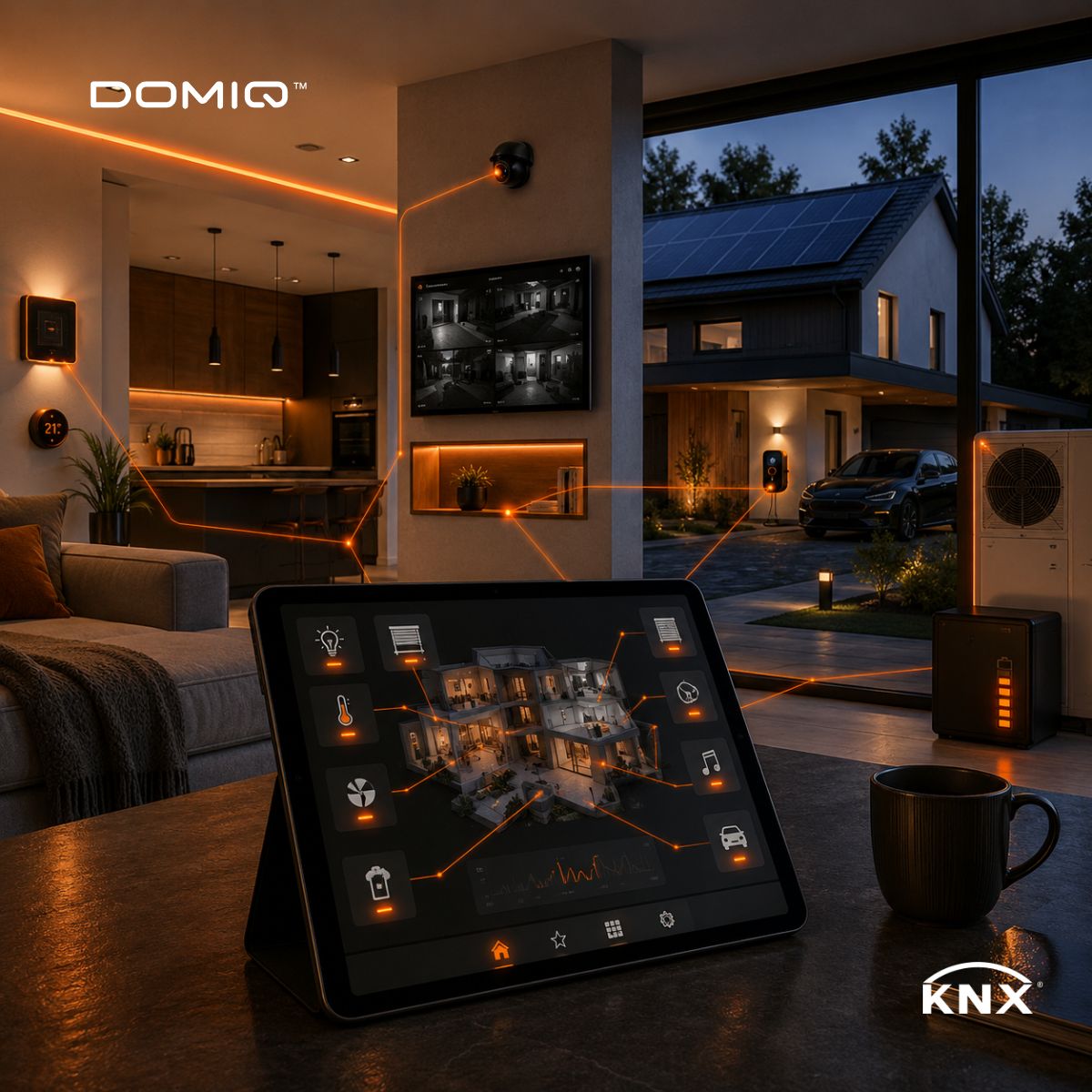
KNX is ideal as the foundation for building automation. DOMIQ expands its capabilities with integration, visualization, logic, and energy management features.

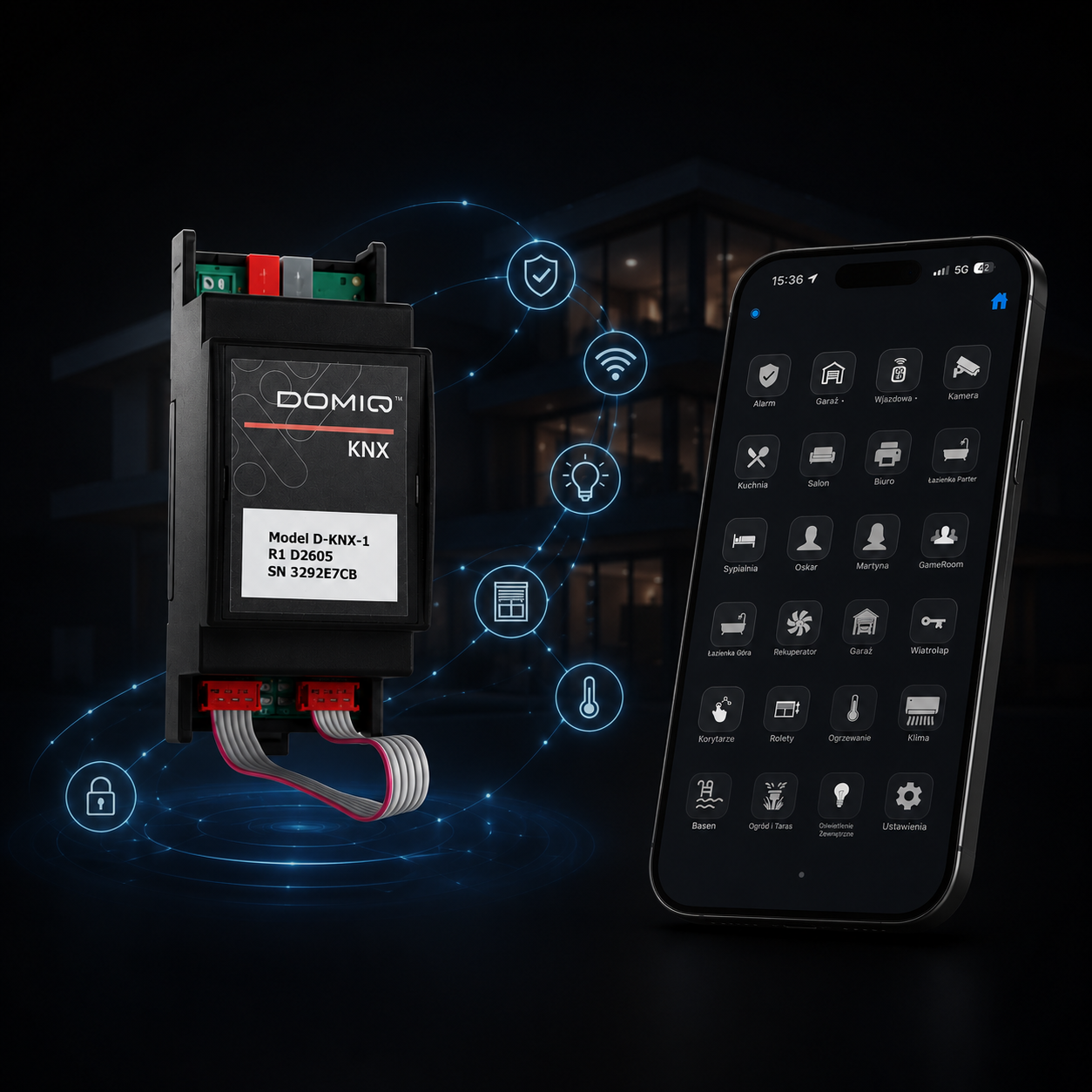
Thanks to the DOMIQ KNX module, devices operating under the KNX standard can communicate not only with each other but also with systems using other technologies, creating a single, cohesive building automation environment.

This is particularly important in modern buildings, where, in addition to KNX, devices using Modbus, BACnet, and MQTT, as well as audio-video systems, photovoltaic systems, energy storage systems, and smart energy meters, are often found.

How does a KNX system benefit from DOMIQ?

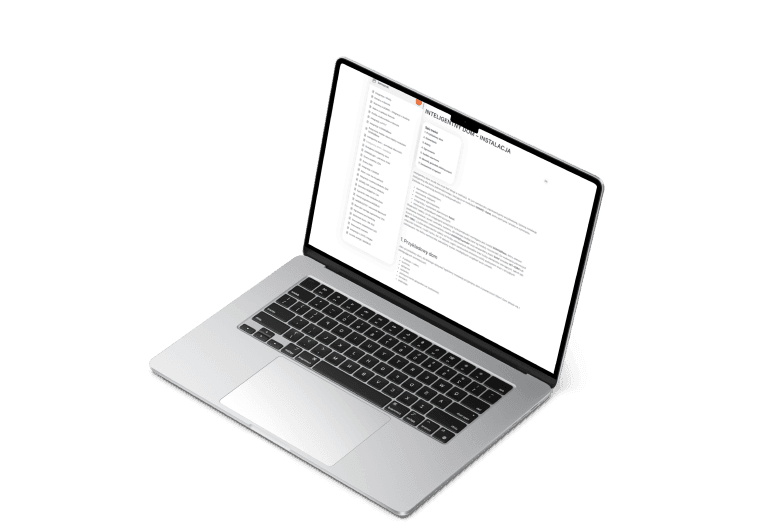
MacBook-Air-15 z konfiguracją DOMIQ

KNX Programming Without an Additional KNX/IP Interface

DOMIQ Base 2.0 can function as a KNX tunneling server. This makes it possible to program KNX devices without the need for an additional router or KNX/IP interface.

This means:

  • simpler system architecture,
  • fewer devices in the switchgear,
  • lower implementation costs,
  • more convenient setup and maintenance.

Want to start but have questions? Contact us – we’ll guide you through the whole process.

DOMIQ x KNX
— more possibilities than a single system

Frequently Asked Questions

Does DOMIQ replace the KNX system?

No. DOMIQ does not replace KNX, but rather expands its capabilities. KNX handles communication and control of devices in the system, while DOMIQ adds features for integration, logic, visualization, energy management, and interoperability with other technologies.

Yes. The DOMIQ KNX module enables direct communication between the KNX system and DOMIQ Base 2.0.

Yes. One of DOMIQ’s greatest advantages is its ability to integrate multiple technologies into a single system. This allows a KNX installation to work with solutions based on Modbus, BACnet, MQTT, LCN, and many other devices and services.

In many cases, yes. DOMIQ Base 2.0 can function as a KNX tunneling server, which allows you to program KNX devices without needing an additional router or KNX/IP interface.

Yes. KNX devices are programmed and configured using ETS software. DOMIQ integrates with the existing KNX installation and allows you to utilize its functions in logic, visualizations, and automation.

DOMIQ can work with many types of KNX devices, such as lighting controllers, roller shades, blinds, heating systems, air conditioning systems, motion sensors, presence sensors, weather stations, energy meters, and other devices that communicate via the KNX standard.

Yes. KNX functions and devices can be displayed in visualizations and in the DOMIQ app. This allows users to control the entire building from a single, unified interface.

Yes. DOMIQ allows you to create advanced automation scenarios that use data from KNX and other systems in the building. Automation scenarios can take into account schedules, weather conditions, energy consumption, user presence, and information from other devices.

Yes. KNX is primarily a wired standard that uses a dedicated communication bus. This ensures high operational stability and reliability, even in large installations. With DOMIQ, you can combine this solution with wireless solutions.

Yes. DOMIQ allows you to create advanced automation scenarios that use data from KNX and other systems in the building. Automation scenarios can take into account schedules, weather conditions, energy consumption, user presence, and information from other devices.

This is possible; however, KNX is most often installed during new construction or major renovations due to the need to install bus wiring. In existing buildings, the scope of work depends on the feasibility of routing the cables.

Yes. With DOMIQ, it is possible to integrate KNX and LCN systems into a single building automation environment. This allows for the implementation of shared scenarios, visualizations, and logic that encompass devices operating on both technologies.

No. KNX and DOMIQ are used in single-family homes as well as in offices, hotels, public buildings, and advanced BMS systems.

Yes. KNX is an open standard supported by many manufacturers. Integrating KNX with DOMIQ further expands the possibilities for adding new technologies, devices, and features without having to rebuild the entire system.

Over 15 years in the industry

Many years of experience in the building automation industry have allowed us to create a reliable system that meets customer demands.

+20 000
Active users

Over 950 operating installations in 20 countries

Integrations